

Making the most of graduate school
How Tony Nalovic M.S. ’14 supercharged his career at W&M’s VIMS & Batten School
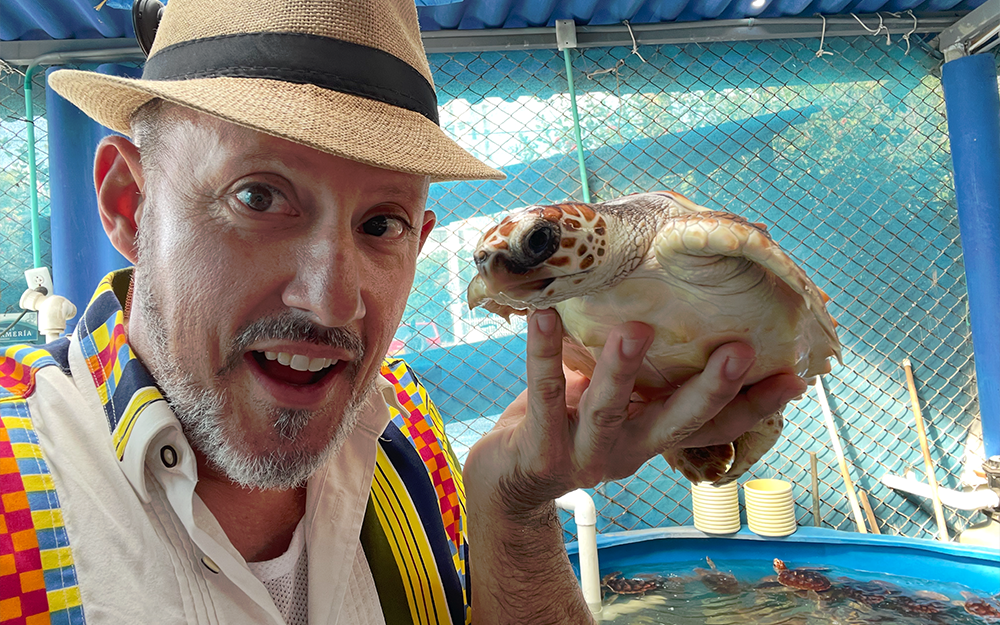 The path for many graduate students is relatively straightforward: earn a bachelor's degree, enroll in graduate school, then find a full-time job. However, Michel "Tony" Nalovic took a different route. By the time he arrived at William & Mary's VIMS & Batten School in 2011, Nalovic had already spent a decade working to align fisheries management with environmental conservation and was seeking an advanced degree to take the work he already loved to the next level. And it’s a path he easily recommends to undergraduates.
“After your first diploma, go to work. Try different things,” he suggested. “By the time I went to VIMS & the Batten School, I knew exactly what I wanted to do, and that was the work I was already doing, but I wanted to do it even better. Because I knew what I wanted, I was able to say, ‘I need to take this class,’ or ‘I want to have that experience.’ It helped me make the most of my time.”
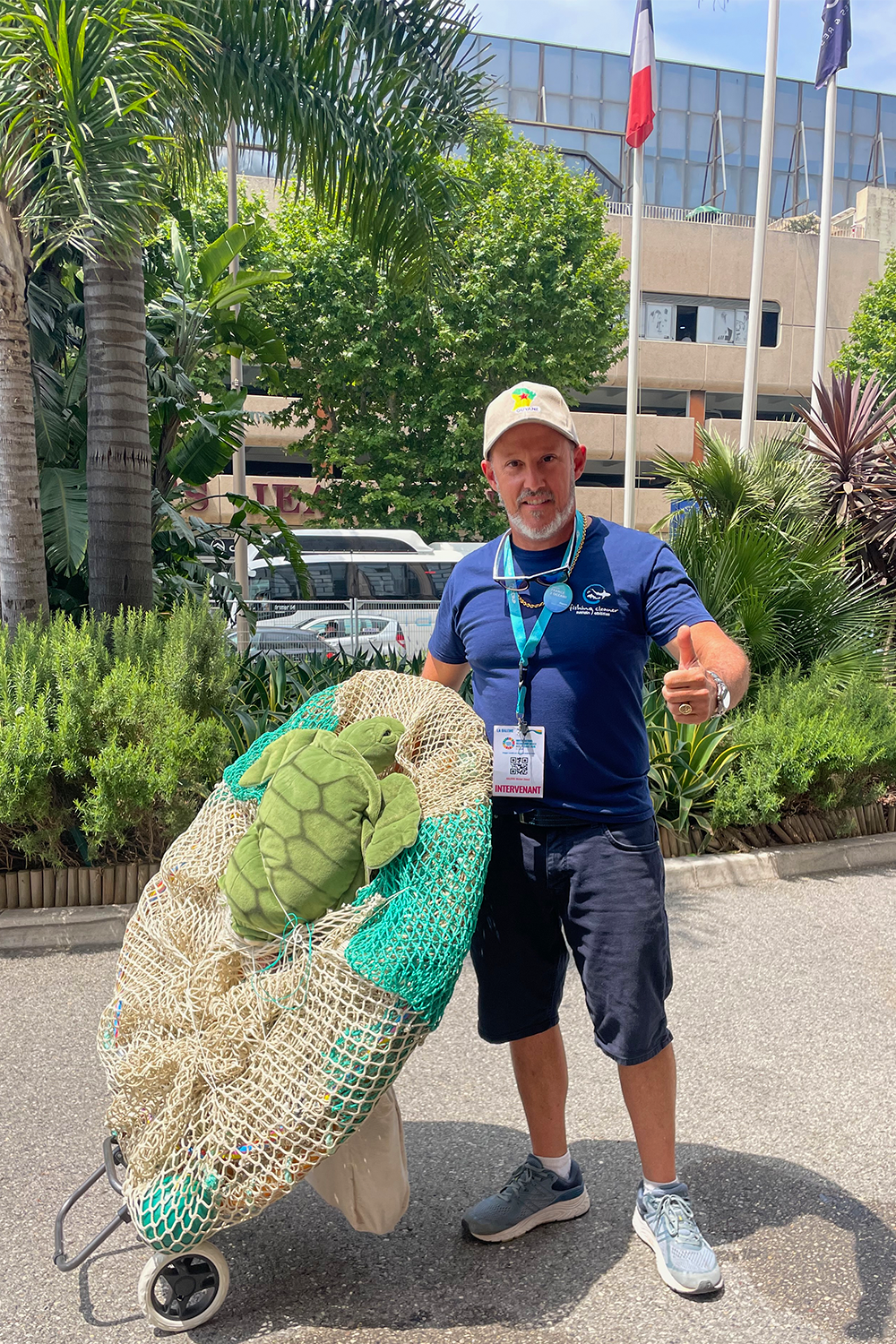 Nalovic’s untraditional path started in French Guiana, where he was born into the fishing industry. His mother, an Italian-American, and his father, a Serbian-born Frenchman, operated a large shrimp trawling operation in the South American region. At age 11, the family relocated to New Orleans, where Nalovic graduated high school and then college, earning a B.S. in marine science from Spring Hill College, a small Jesuit school in Mobile Alabama. After graduation, Nalovic returned to French Guiana to begin pursuing his passion for fisheries support.
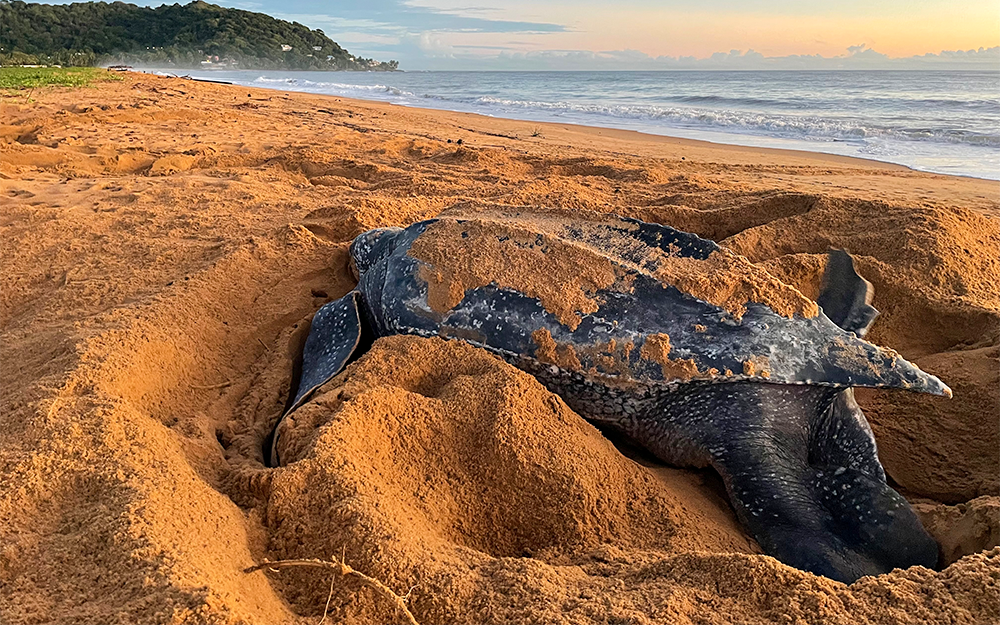
“I was one of the first employees they’d ever hired,” he said of the job he accepted with the French Guiana Regional Fisheries Committee. “A lot of things were missing in the fisheries, notably on the environmental side. Unlike in the U.S., there were only a few marine protection laws, and none that addressed megafauna bycatch. There were no turtle excluder devices (TEDs) on the shrimp boats and there had been zero coverage of artisanal coastal fisheries bycatch. That was one of the first things I started working on.”
Nalovic began meeting with the World Wildlife Fund (WWF) of French Guiana and was quickly connected to scientists working in the Harvesting and Engineering Branch of the U.S. National Oceanic and Atmospheric Administration (NOAA) Mississippi Laboratory. After securing initial funding to begin piloting TEDs with French Guiana’s local fleets, tests yielded promising results for decreasing bycatch, including sea turtles, sharks and stingrays.
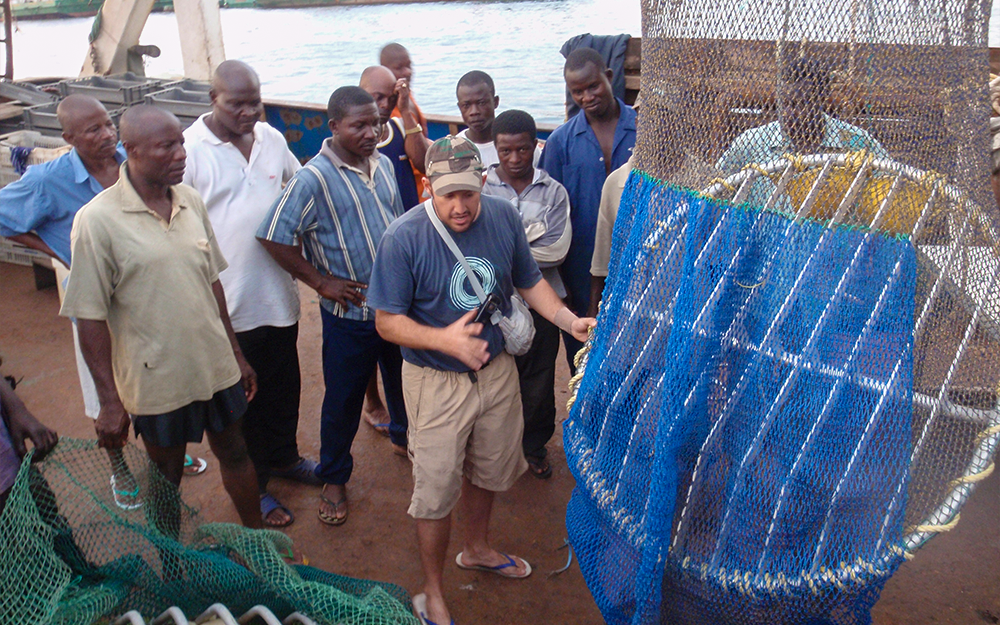
More importantly, Nalovic was also deepening personal relationships with the local commercial fishers who grew to trust that he respected them and had their best interests at heart. Ultimately, the region’s fishing captains met and decided, entirely on their own, to mandate the adoption of a restricted bar spacing TED. That kind of voluntary, community-based adoption is incredibly rare in the world of commercial fishing.
“In some places, where top-down forces tried to dictate regulations like that, they burned the ports. But here, they volunteered to use the TED, because it works,” said Nalovic. “I like from-the-ground-up movements. Top-down decisions can work in the U.S. and a few other places, because there's more inspection and enforcement resources, but the rest of the world does not have that.”
 Nalovic’s ability to bridge the gap between scientists, commercial fishers and policymakers caught the attention of John Mitchel, one of the NOAA scientists with whom he had been working. Mitchel encouraged Nalovic to reach out to Troy Hartley at VIMS & the Batten School of Coastal & Marine Sciences, who was starting a fellowship dedicated to Collaborative Fisheries Research (CFR). Nalovic called Hartley and the pair quickly recognized their shared interest in the social science of fisheries, but Nalovic doubted his academic credentials were adequate to apply to graduate school.
“Troy told me to take a year to practice for the GRE, so I ordered the study books and practice sheets. After a year, I went to the U.S. and took the test. I did better than I ever thought I would, but still a little shy of VIMS standards,” recalled Nalovic. “But Troy said, ‘You’ve been working for 10 years. You’ve done something I haven’t seen a lot of other people do. You’re going to be my first full-time student.’”
Nalovic was accepted into VIMS & the Batten School on a temporary basis, depending on his first-semester grades. Unsurprisingly, he far exceeded those expectations. “It turns out you really can wake up and jumpstart the brain,” he said. “It was like a system reboot with the latest information, the latest science and methods.”
It also turned out that graduate school was far less lonely than Nalovic expected. “I ended up making great friends, many of whom I’m still in touch with,” he said. “There were camping trips, music festivals and trips to D.C. You weren’t lost among several hundred people; you had a 20-person crew of fellow grad students who supported you.”
 Those positive experiences, which exposed Nalovic to a range of science outside of his primary focus, ultimately made him a more well-rounded and effective researcher, conservationist and consultant.
“There have been so many times since graduating when something unexpected has come up, and I’ve remembered, ‘I did that in grad school,’” he said. “I tell grad students to be curious about what other students in other units are doing. Sit in on their experiments, ask if you can read a chapter of their thesis and help them collect samples in the field. Go touch things outside your own lab and broaden your knowledge of marine science, because you never know when it will be useful down the road.”
Nalovic used his own master’s thesis to test reduced bar spacing in TEDs for the Gulf of Mexico’s shrimp trawl industry. The fellowship, co-funded by NOAA and Virginia Sea Grant, proved fruitful in developing lasting solutions that Nalovic was able to take back to French Guiana following his graduation in 2014.
Back with the Regional Fisheries Committee, Nalovic dedicated another 10 years to positioning fishing as a proactive, environmentally-sound, sustainability-seeking industry. From helping local partners develop projects that increased adoption of bycatch reduction strategies to installing observational cameras on fishing vessels and jointly developing voluntary and temporary annual non-fishing zones, Nalovic has led French Guiana into becoming a global model for CFR and marine megafauna bycatch mitigation.
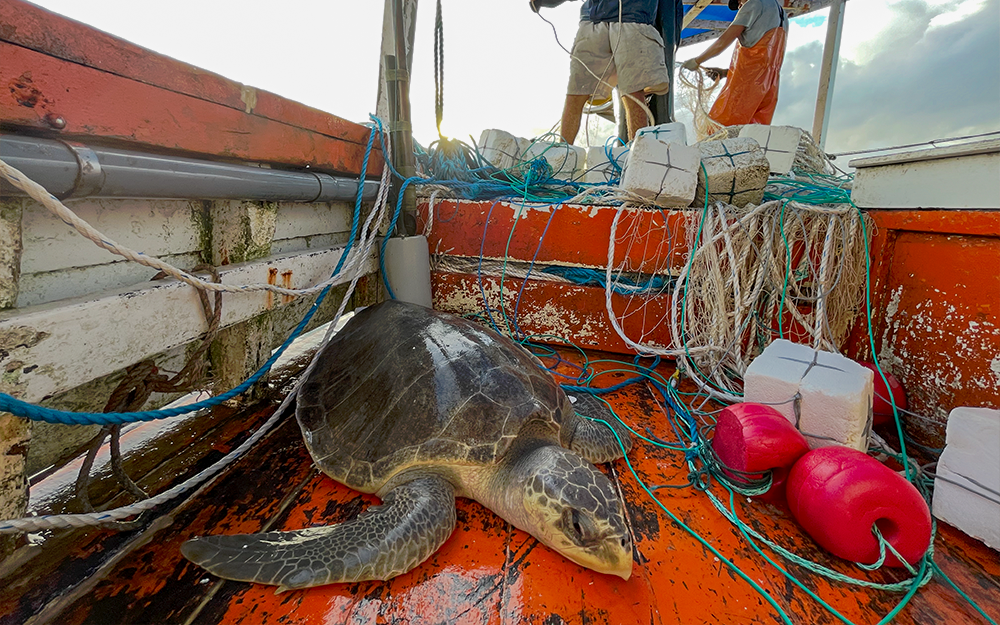
Changes in how France and other European Union nations work to reduce bycatch, and even fight illegal fishing, can be traced back to policies originating in French Guiana, and from there back to Nalovic’s formal training at VIMS & the Batten School.
Graduate courses in oceanography, physics and statistics gave him new ways to think about problems he had already been solving in the field, while Hartley’s expertise in social science provided theoretical and applied frameworks for further fostering fisheries collaboration. Nalovic also credits graduate school lessons in communication with propelling his success.
“One of the first things that VIMS & the Batten School instilled in us was that your research is only as good as your capacity to communicate about it,” he said, reflecting on the first-semester science communication class required of all students. “Today, I’m writing technical reports and organizing symposiums. That’s how people in government and industry get their information; they’re rarely reading peer-reviewed journals. So, you need those real-world communication skills.”
Today, Nalovic continues to chart his own path in conservation, serving as president of two very different yet complementary organizations: Trans Océans Tortues Marines, an environmental nonprofit he started with French colleagues in 2019 that advocates for international conservation strategies for marine turtles, and Fishingcleaner.com, a consultancy business he launched in 2021 providing evaluations, advice, training and coordination for industrial and artisanal fishing bycatch reduction.
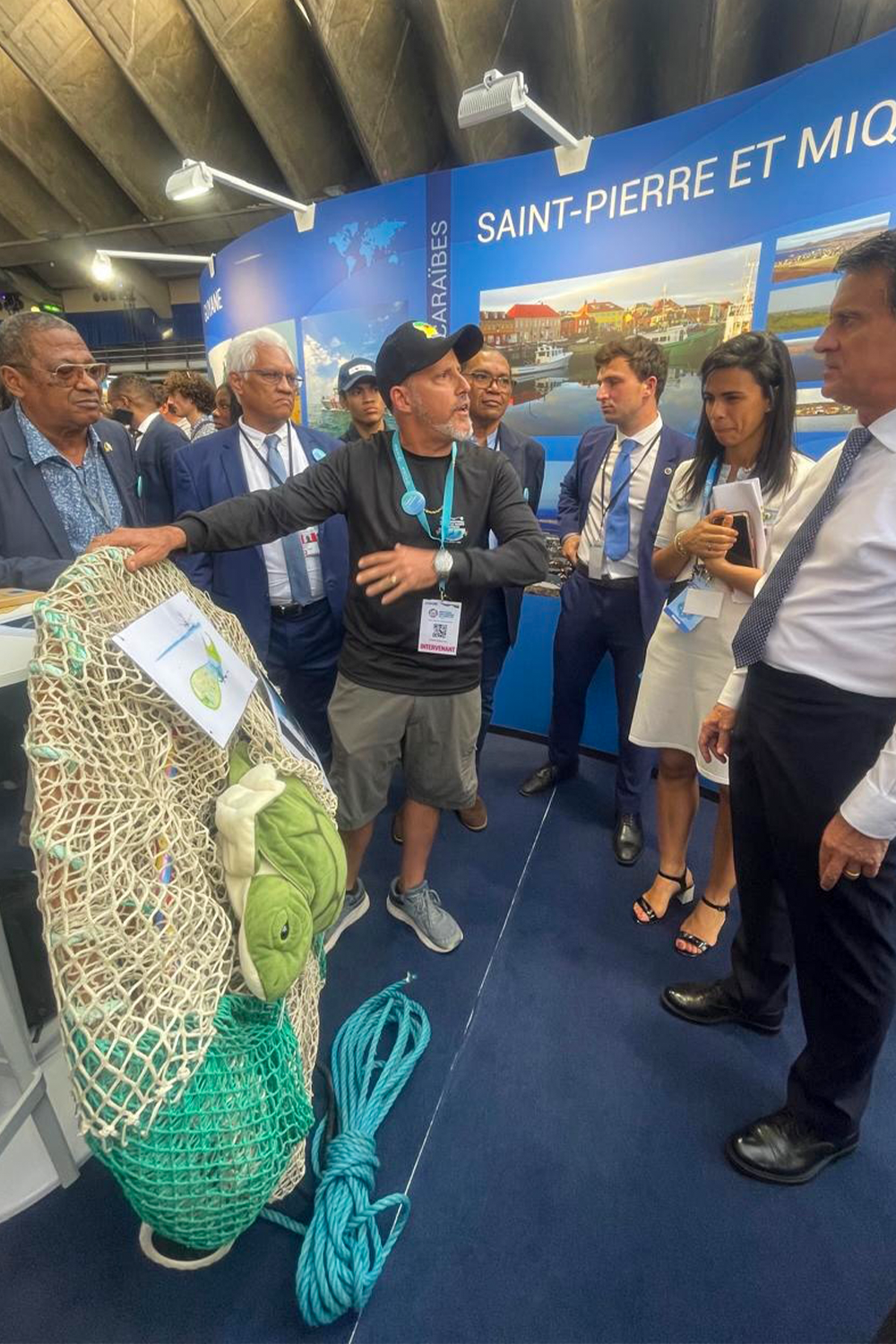
“I found that I needed both,” said Nalovic. “Having an NGO gives you access to certain sectors, and being in the business world allows you to be in other sectors. For example, an NGO can’t run observer programs for fishing industries, but a company can.”
By having a foot in both worlds, Nalovic is now pursuing conservation efforts from China and several African countries to South America and the Caribbean. He is also working with the Specially Protected Areas and Wildlife Regional Activity Centre, which was created in 2000 through an agreement between the United Nations Environment Programme and France, to apply CFR and explore ways to further reduce marine megafauna bycatch.
Nalovic estimates that approximately 50% of his time is spent on megafauna bycatch reduction, and another 20% is spent fighting illegal, unreported and unregulated fishing. The rest of the time, he is consulting, staying in contact with key stakeholders, writing essential whitepapers and organizing workshops at international symposiums.
Through it all, Nalovic remains connected to the school that provided the training necessary to formalize what he was already doing through instinct, experience and relationship-building.
“I was very fortunate to have VIMS in my life,” he said. “It gave me confidence, and I met some amazing professors and had such a great support group. I'm very grateful.”
This alumni profile was published in October, 2026.